 At first glance of this play, I thought this would be a rather elementary reading since it was merely short of ten pages. I knew it would be a challenge nonetheless from being a Beckett work, but I was sure it being so short meant I could read it a few times and get something out of it within an hour. Obviously, I was wrong about this assertion and it took me ages to finally get something out of this rather confusing play.
Actually seeing the play on film helped me in understanding the stage directions at parts I got lost, but I still was not able to make anything out of the play. I read through it multiple times and tried defining some kind of meaning in select sections, yet I was still at a failure in comprehension. There were some parts like the fire that I got an idea that it might stand for something like the passion involved with writing; although, I was not able to find a way to paint a bigger picture out of this thought. I also noticed quite a bit of religious imagery that I wasn't able to understand its implications such as the duality between light/dark and the idea of the fire acting as the holy ghost (something I recall from a Bible story regarding the holy spirit coming down in tongues of fire which helped the disciples understand language universally). What really helped me in putting these thoughts together was searching up the inspiration of "Krapp's Last Tape" with Ethan at the beginning of class last Wednesday. We discovered that the play was inspired from Beckett listening to Patrick Magee reading excerpts from Molloy.
This understanding greatly helped in figuring the content of the play since I saw more validity in my ideas like the fire standing for writing's passion. The tapes were in a way a metaphor for writing with the older author looking upon the works he did when he was in his thirties, and then the comparison from that to the writings from his twenties. This would all make sense in regards to how authors change their style over time and especially how we have seen that in Beckett. We started the semester looking at the older Beckett and then shifted back to his earlier works which were dramatically different in composition. I don't think he is discrediting his older works in anyway, but certainly Beckett is saying that our writing/ideas/beliefs do change and can even do so in a sense completely contradictory to former ideologies.
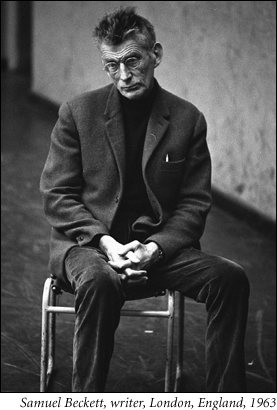
I think my favorite element of this play involves the style being strikingly similar to that of the original trilogy with a central character explaining these stories through the lenses of non-present characters. Beckett made Molloy theatrical through incorporating stage movement and dialogue between three different periods of a person's life thus adding a new dimension for storytelling.

Drew,
ReplyDeleteYour idea about fire being the writer's passion is brilliant! I also appreciate the order that we have taken in Beckett thanks to you. Now I understand that Krapp is Beckett looking back on earlier works. Genius! Keep up the amazing work.
-Malra